Proof It Works
Restoration
Success Stories
These ecosystems were destroyed. Then communities, scientists, and governments decided to bring them back. Here's what happened.
Mesopotamian Marshes
“The world's greatest wetland resurrection — drained by a dictator, brought back by its people”
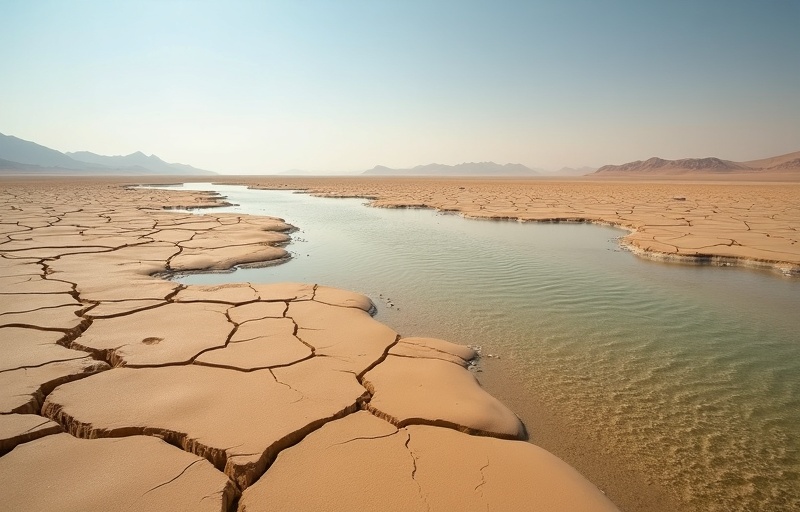
A landscape of deliberate ruin
By 2000, Saddam Hussein had drained over 90% of the Mesopotamian Marshes through 32 dam and canal projects, destroying what was once the world's third largest wetland. The intent was to eliminate the Marsh Arabs (Ma'dan) — a 5,000-year-old civilization — by destroying their home. 250,000 people were displaced. The marsh became a desert.
The Story
For 5,000 years, the Marsh Arabs of southern Iraq built floating reed islands, fished from wooden boats, and raised water buffalo in one of the world's most extraordinary wetland civilizations. The Mesopotamian Marshes — the likely inspiration for the Garden of Eden — were home to some of the richest birdlife in the Middle East and a critical stopover on the Central Asian flyway.
In the early 1990s, Saddam Hussein ordered the systematic draining of the marshes using 32 engineering projects — dams, dikes, and drainage canals — explicitly designed to punish and displace the Marsh Arab population following a failed Shiite uprising. By 2000, 90% of the marshes were gone. The landscape that had supported continuous human habitation for millennia was reduced to salt flats and dust.
After 2003, communities returned with shovels and explosives. They broke embankments. They opened sluice gates. Water flooded back through channels that had carried it for thousands of years. By 2006, satellite imagery confirmed that 58% of the original marsh had reflowed. Fish populations recovered within two years. The Basra Reed Warbler, believed locally extinct, was photographed breeding in the new reeds within five years.
In 2016, UNESCO inscribed the marshes as a World Heritage Site — recognizing both the cultural legacy of the Marsh Arabs and the ecological significance of the recovery. The story of the Mesopotamian Marshes is the most dramatic large-scale wetland restoration in recorded history.
Marshes intact — 15,000–20,000 km² of thriving wetland supporting 250,000 Marsh Arabs
Saddam Hussein drains 90% of the marshes to suppress the Marsh Arab population after a failed uprising
Marsh essentially destroyed — reduced to 10% of original area. UNESCO calls it one of the world's greatest environmental disasters
Fall of Saddam's government. Marsh Arabs begin breaking embankments with their own hands
Satellite imagery confirms 58% of original marsh has reflowed — the fastest large wetland recovery ever recorded
UNESCO World Heritage Site inscription recognizes both ecological and cultural significance
60% recovered. Ongoing threats from upstream Turkish and Iranian dams reducing water flow remain
Organizations Involved
All six restoration wins
These places came back. Others still can.
Every one of these stories started with someone refusing to accept that the damage was permanent. The science, the communities, and the funding models all exist. What's needed is will — and people like you.