Ecosystem Deep Dive
Freshwater Systems
Freshwater covers just 2.5% of Earth's surface — yet supports over half of all known fish species and the drinking water of 8 billion people. It is the most essential, and most abused, resource on the planet.
The Four Systems
Where Earth's freshwater lives
Rivers & Streams
Rivers are the arteries of civilization — but dams, diversions, and pollution have severed natural flows in over a third of the world's major rivers. Species that evolved over millions of years to migrate and spawn in specific flow patterns are being wiped out as their rivers are engineered into canals.
Lakes & Reservoirs
The world's lakes hold 87% of Earth's liquid surface freshwater — and they are warming twice as fast as the atmosphere. Algae blooms triggered by agricultural runoff are spreading across lakes on every continent, suffocating aquatic life and making water undrinkable.
Aquifers
Underground aquifers hold 30% of Earth's freshwater and supply drinking water to billions. But we are pumping them 25 times faster than they recharge in some regions. The Ogallala Aquifer, which feeds the US Great Plains, could be effectively depleted within 50 years at current rates.
Glaciers & Snowpack
Glaciers store 70% of the world's freshwater and release it slowly through the summer months, feeding rivers when rain is scarce. As they disappear, billions of people face 'peak water' — an initial surge followed by permanent, accelerating scarcity.
Rivers in Crisis
Three rivers that tell the whole story
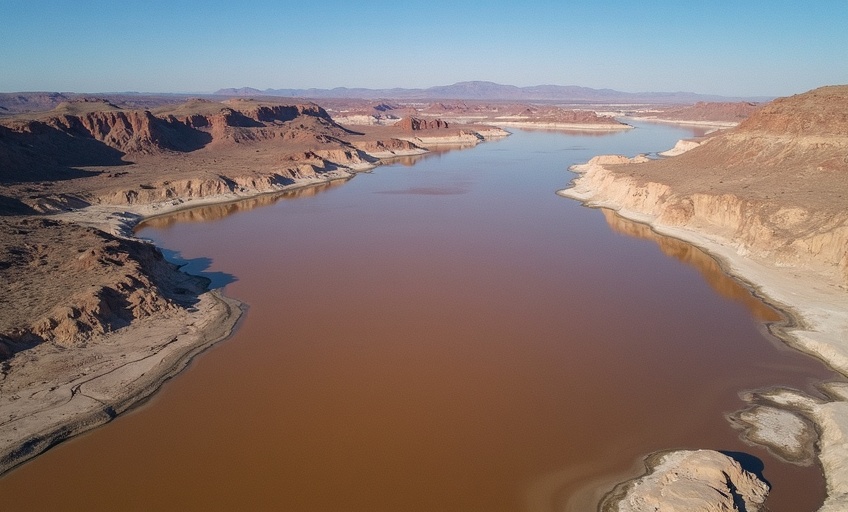
Colorado River
The Colorado River no longer reaches the sea. Decades of over-allocation across 7 US states and Mexico have reduced its delta to a dry mudflat. Lake Mead and Lake Powell, the two largest US reservoirs, reached historically low levels in 2022, triggering the first-ever federal water shortage declaration.
Mekong River
Eleven dams on the upper Mekong in China have disrupted the flood pulse that shaped the entire lower basin's ecology and agriculture for millennia. Fish populations have crashed by 50%. Sixty million people who depend on the river's fisheries and sediment-fed agriculture face a slow-motion humanitarian crisis.
Ganges-Brahmaputra
The Ganges is among the most polluted rivers on Earth, receiving raw sewage, industrial chemicals, and agricultural runoff from 400 million people. Sacred to Hinduism, the river's pollution is simultaneously a public health emergency and a political and religious crisis. Dolphin and gharial populations have collapsed.
Special Feature
The Hidden Giants: Freshwater Springs
Springs are places where ancient groundwater surfaces — often after traveling underground for decades or centuries. They are among the most stable, biodiverse, and irreplaceable freshwater habitats on Earth.
Constant Temperature Refuges
Most springs maintain a constant year-round temperature equal to the average annual air temperature of their region. As surface waters warm and extreme weather events intensify, springs serve as thermal refugia — islands of stability for cold-water fish, rare salamanders, and aquatic invertebrates that cannot survive in warming rivers and lakes.
Ancient Water Made Visible
Water emerging from a spring may have entered the aquifer decades, centuries, or even thousands of years ago. Springs are direct windows into the health of entire aquifer systems — when spring flow drops, it signals unsustainable extraction across a vast underground watershed that may span hundreds of miles.
Endemic Species Hotspots
The constant, stable conditions of springs allow species to evolve in isolation over millennia. Many spring systems host endemic species — animals and plants found nowhere else on Earth — that have adapted precisely to that spring's chemistry, temperature, and flow. Destroy the spring, and the species disappears from the planet.
Drinking Water Foundations
Springs historically supplied drinking water to human civilizations wherever they occurred. Today, the aquifers that feed springs also supply wells, municipal water systems, and irrigation across vast regions. Spring health is a direct indicator of whether we are extracting groundwater sustainably — or spending down a finite, essentially non-renewable resource.
Riparian Corridor Anchors
Spring runs — the streams fed by spring flow — create ribbons of permanent freshwater through landscapes that may be seasonally or permanently dry. In arid regions like the American Southwest, spring-fed streams support the majority of the region's terrestrial and aquatic biodiversity. They are the life-giving thread through an otherwise harsh environment.
First to Feel Aquifer Stress
Springs are the first ecosystems to show the effects of groundwater over-pumping. When aquifer levels fall, spring flow decreases and eventually stops. This is happening to hundreds of springs across the US and globally — a quiet crisis that precedes the broader collapse of water supplies for cities, farms, and ecosystems downstream.
Interactive Map
America's endangered springs
Click any pin to explore the history, threats, and species of eight of the US's most vital — and most endangered — freshwater spring systems.
America's Endangered Springs
8 documented spring systems · Click a pin to explore
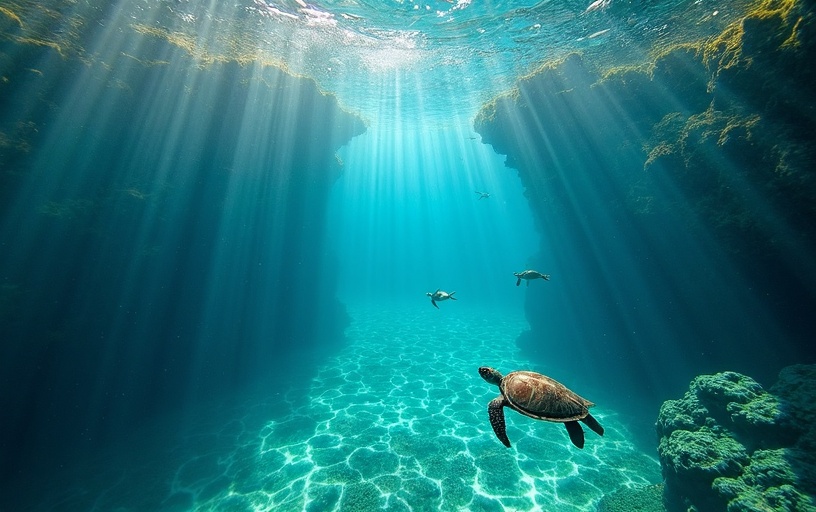
Ichetucknee Springs
One of Florida's most stunning spring systems, Ichetucknee feeds a 6-mile spring run through ancient cypress forest. It hosts manatees, turtles, and over 40 fish species. Nitrate pollution from surrounding agriculture has dramatically reduced native plant life, replaced by algae blooms that suffocate the riverbed.
“Ichetucknee Springs discharges enough fresh water each day to fill over 350 Olympic swimming pools.”
Active Threats
- Agricultural nitrate runoff
- Over-pumping of the Floridan Aquifer
- Algae overgrowth
- Urban development pressure
Species at Risk
- West Indian Manatee
- American Alligator
- Suwannee Bass
- Florida Gar
The Path Forward
Freshwater can be saved — but the window is closing
Unlike many ecosystem crises, freshwater degradation is highly reversible — when rivers have their flows restored, fish return within years. When aquifer pumping is reduced, springs revive. When agricultural runoff is controlled, algae blooms fade.
The barriers are almost entirely political and economic, not technical. We know how to fix this. The question is whether we will choose to — before aquifers that took 10,000 years to fill are gone in the next 50.
The water crisis is here. It's not a future problem.
Freshwater is the common thread through every food, climate, and biodiversity crisis. Protecting it isn't just about nature — it's about whether human civilization continues to function at current scales.