Ecosystem Deep Dive
Marshlands
Earth's kidneys. Carbon archives. The great migrating bird highways. We've drained 87% of them — a loss so vast it barely registers on most people's radar.
What They Are
Standing water. Extraordinary life.
Marshlands are wetlands dominated by soft-stemmed vegetation — reeds, cattails, bulrushes, and sedges — that grow in shallow standing or slow-moving water. They occur everywhere from Arctic tundra to tropical deltas, and each type performs distinct, irreplaceable ecological functions.
The 87% loss figure is staggering — but the scale of what remains is equally staggering. The Everglades, the Pantanal, the Okavango Delta, the Prairie Potholes — these are among the most biologically productive places on Earth. And they are all under active threat.
Humans have drained marshes to grow crops, build cities, and extract peat for garden centers. The irony is profound: we drain the very systems that control our floods, clean our water, and stabilize our climate — then spend trillions repairing the damage.
Types of Marshlands
Four worlds of water
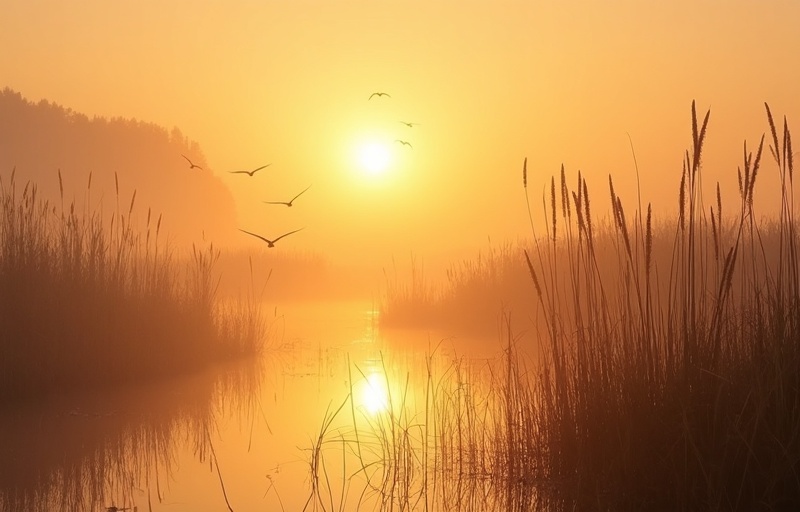
Freshwater Marshes
Found along rivers and lakes, dominated by reeds, cattails, and sedges. Critical for migratory birds and amphibians. Most heavily drained for agriculture.
Saltwater Marshes
Coastal marshes at the edge of tidal zones. Dominated by salt-tolerant grasses like Spartina. Protect coastlines from erosion and serve as nurseries for marine species.
Peatlands & Bogs
Waterlogged systems that accumulate organic material over thousands of years. Massive carbon stores — containing more carbon than all tropical forests combined.
Floodplain Wetlands
Seasonally flooded river margins that support extraordinary biodiversity. The Pantanal — the world's largest floodplain — hosts jaguars, capybaras, and over 650 bird species.
Why They Matter
The work marshes do, invisibly
Nature's Water Filter
Marshlands remove nitrates, phosphates, heavy metals, and pathogens from water with an efficiency that no engineered treatment plant can match at scale. Wetland soils and plants absorb pollutants through biological uptake and denitrification. A single acre of wetland can remove over 300 pounds of nitrogen per year — pollution that would otherwise reach drinking water supplies and trigger algae blooms in rivers and bays downstream.
Flood Sponge
Marshes act as natural sponges, absorbing and storing floodwater during heavy rainfall or storm events and releasing it slowly. They reduce downstream flooding by up to 80% in some watersheds. As climate change intensifies rainfall events and raises sea levels, destroyed wetlands are being replaced by expensive engineered flood infrastructure — at 5 to 10 times the cost of wetland preservation.
Climate Regulation
Peatlands — a type of waterlogged marsh — store twice as much carbon as all the world's forests combined in just 3% of the Earth's land area. When drained and burned, they release centuries of stored carbon rapidly. Indonesia's burning of drained peatlands has, in some years, released more CO₂ than the entire US economy. Protecting marshlands is among the highest-leverage climate actions available.
Migration Corridor
Over 50% of North America's migratory bird species — 3 billion birds each year — depend on wetlands for food, rest, and nesting. The Prairie Pothole Region alone produces 50–80% of North America's waterfowl. As wetlands disappear, migratory routes collapse and species populations crash. Bird losses are direct indicators of wetland health — and we have lost 3 billion birds in North America since 1970.
Groundwater Recharge
Wetlands recharge aquifers by holding water on the surface long enough to percolate into underground reservoirs. In areas where wetlands have been drained, aquifer levels have dropped dramatically — affecting agricultural irrigation, municipal water supplies, and the rivers that flow from groundwater springs. The drained wetland disrupts a water cycle that took millennia to establish.
Food Security
Rice paddies — engineered marshlands — feed over 3 billion people. But natural marshes also sustain enormous wild food production: fish, crayfish, clams, waterfowl eggs, and medicinal plants that form the backbone of food and health systems in communities across Asia, Africa, and the Americas. The loss of natural marshland food systems disproportionately harms Indigenous and rural communities.
The Scale of Loss
How much has each region lost?
North America
53% lostOver 220 million acres drained since European settlement. The Prairie Pothole region lost 70% of its wetlands to corn and soybean farming.
Europe
60% lostNetherlands drained nearly all natural wetlands by the 20th century. UK lost 75% of peatlands to peat extraction for horticulture.
Asia
59% lostChina drained vast floodplain wetlands for rice farming. Southeast Asian peatlands burned for palm oil plantations.
Africa
42% lostRapid drainage for agriculture and urbanization. The Niger Delta marshes are severely degraded by oil spills and drainage.
Australia & Oceania
50% lostSwamp drainage for sheep farming since the 19th century. Murray-Darling floodplain wetlands reduced by 70% due to river regulation.
Reasons for Hope
When we restore marshes, they come back
Wetland restoration works — faster and cheaper than almost any other ecosystem recovery effort.
Mesopotamian Marshes, Iraq
After Saddam Hussein drained the marshes in the 1990s to suppress the Marsh Arabs, international efforts restored water flow after 2003. Wildlife and human communities have returned — though ongoing water scarcity from upstream dams now threatens progress.
Everglades, Florida
After decades of channelization destroyed 50% of the original Everglades, the Comprehensive Everglades Restoration Plan is reconnecting water flow, removing barriers, and rebuilding the 'River of Grass.' Progress is slow but measurable — panthers, wood storks, and snail kites are returning.
Wetlands can be restored. But we need to stop draining them first.
Every policy that drains a wetland trades centuries of ecosystem service for a short-term agricultural gain. The math never adds up. The evidence is overwhelming. We just need the political will to act on it.